

AgentSec
Security for the agents doing the work
Authenticate agents into your apps with a revocable identity, and govern what they call with a per-agent trust store. One owner, one identity, one revoke switch.
- Agents sign in like users do
- The browser OIDC code flow with a key the agent owns. No shared secrets.
- Scope every tool call
- Allowed tools, scopes, and origins per agent in the environment trust store.
- One-click revocation
- New sign-ins and new tokens stop immediately. Owners stay accountable.
Pick your plan
No credit card required. Change plans any time from Plan & Billing.
Authentication for agents
Agents sign in the way people do
Agent Sign-In gives an agent what a person gets from your login page: an identity it owns, the standard browser OIDC code flow, and an owner who can cut it off. Your app adds two config values — no registration, no client secret.
Two config values
Your https origin is the client_id and a same-site redirect URI is the callback. PKCE S256 is mandatory; there is no secret to leak.
Learn more about Two config valuesKeys the agent owns
A P-256 key generated on the agent's side — in its browser, or as a key file its own runtime signs with. The private half never touches a server.
Learn more about Keys the agent ownsStandard OIDC claims
id_token and access token carry sub, email, name, and actor_type: agent — the token validation your app already runs works unchanged.
Learn more about Standard OIDC claimsRemembered approvals
The owner approves an app once; repeat sign-ins are zero-interaction on a 180-day sliding window.
Learn more about Remembered approvalsAccess control for agents
Every caller registered, scoped, and audited
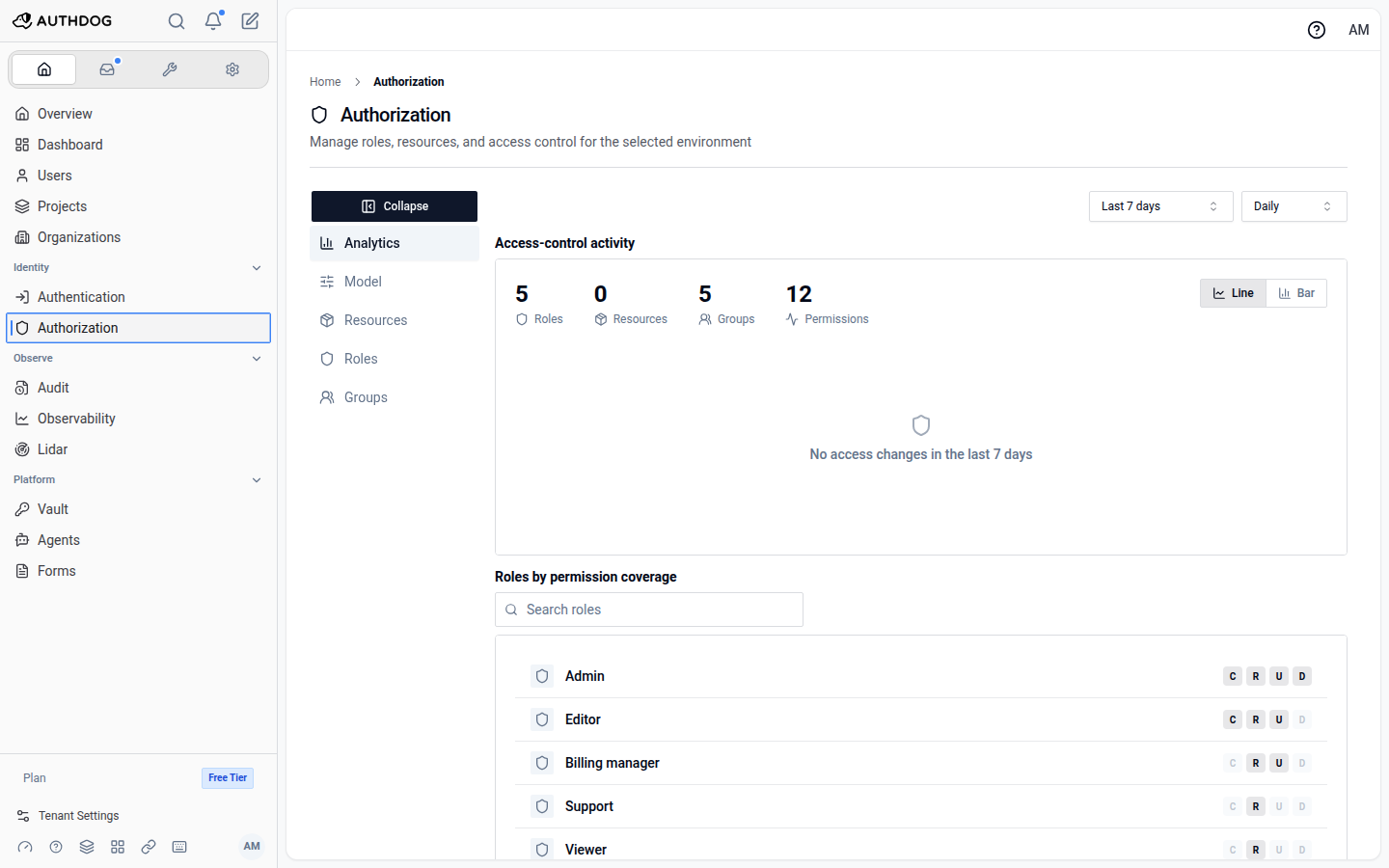
The Agents module registers every non-human caller in your environment's trust store: verified subjects, allowed scopes, allowed tools, and a revoke switch.
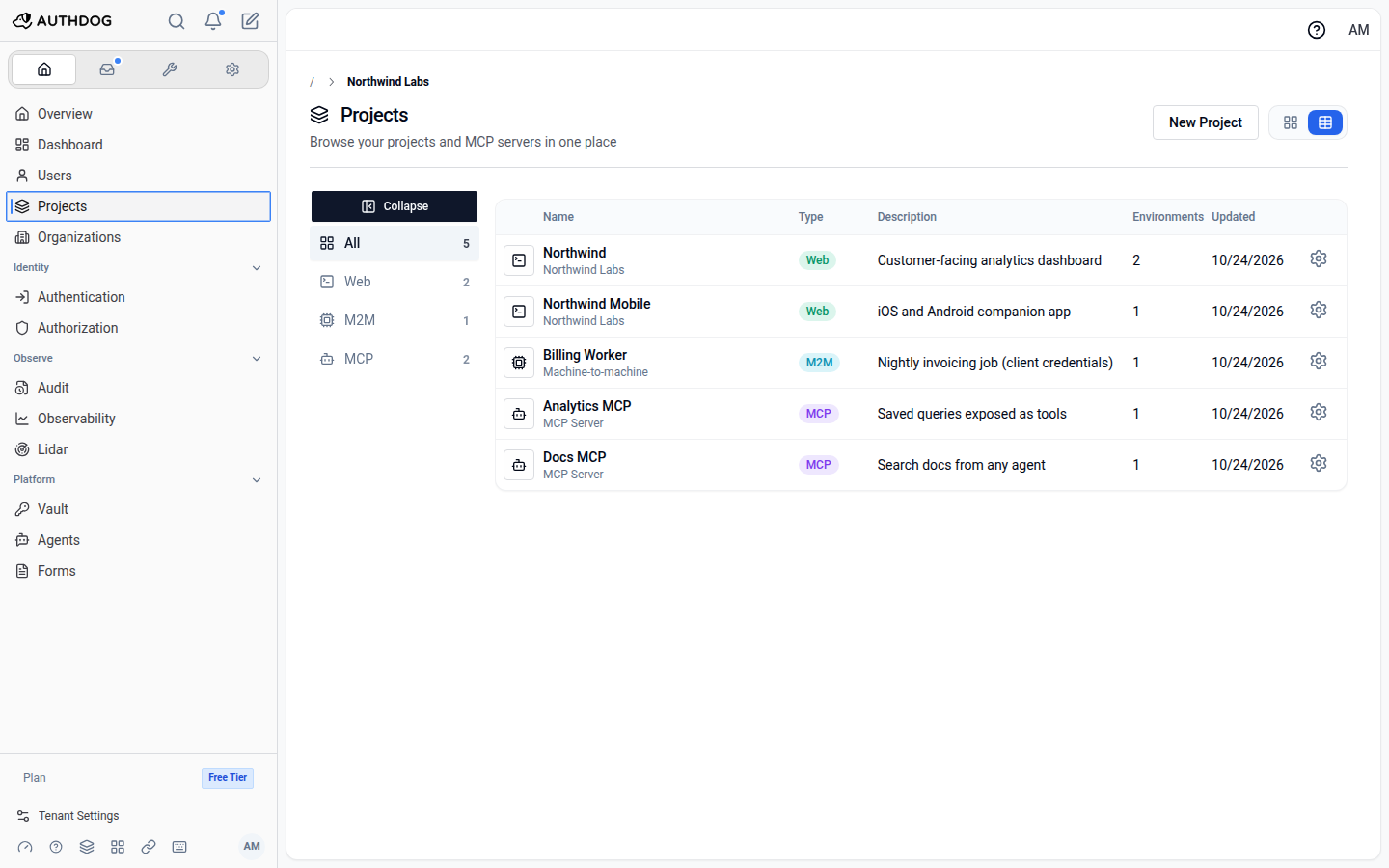
Register and verify
Lifecycle and detection
Delegation without impersonation, detection without guesswork
Agents acting on a user's behalf carry an explicit act chain, and Lidar watches the identity stream for the attacks that target them.
Token exchange, not impersonation
RFC 8693 delegation with a nested act chain and optional identity assertions — the resource always sees who is acting for whom.
Learn more about Token exchange, not impersonationLidar threat detection
Monitors correlate agent-tool abuse, injection, and MCP rug-pulls on the same event stream as your human traffic.
Learn more about Lidar threat detectionOne audit trail
Authentication events and tool activity land in the same environment audit log — actor type included.
Learn more about One audit trailFree trial
Request a free trial
Tell us what you're building and we'll get you set up with a trial, plus someone who can answer questions as you evaluate.
- Full access to the platform while you evaluate it
- Help wiring it into your stack from someone who knows it
- Answers on SSO, SCIM, residency, and compliance requirements
Integrate
Connect one SDK or API to your application.
Configure
Choose policies and capabilities for each environment.
Enforce
Ship globally with identity controls at the edge.
Stop building a second product just to log people in.
Sign-in, access, and the audit trail — so you can get back to the actual app.