

Product
One identity layer. Every app.
Sign-in, access control, user management, enterprise SSO, agent identity, and the console that runs them. One integration, one session model, one place to look when something happens.
- One integration
- Every method, factor, and provider resolves to the same session and tokens.
- Per environment
- Providers, policies, branding, and claims scoped so staging never leaks into production.
- Agents included
- Workloads, MCP servers, and agents get the same identity model as people.
- Edge-native
- Sessions, tokens, and audit logs served from the edge, close to your users.
Identity
Six products, one record per user
Pick what you need today. The rest is already wired to the same users, sessions, and environments.
AI and agents
Authenticate agents, secure tools, and govern MCP access with scoped, revocable identities.
Learn more about AI and agentsAuthentication
Passwordless, MFA, social, and branded sign-in flows from one integration.
Learn more about AuthenticationUser management
Users, organizations, profiles, and lifecycle events in one directory.
Learn more about User managementEnterprise
SAML and OIDC SSO, SCIM and HRIS provisioning, and a self-serve admin portal.
Learn more about EnterpriseSecurity
Lidar is the identity SIEM: search, correlate, and triage signals, then stream them on.
Learn more about SecurityConsole
Run all of it from one console
Turn methods on, inspect users and sessions, model access, and show an auditor later. No deploy required.
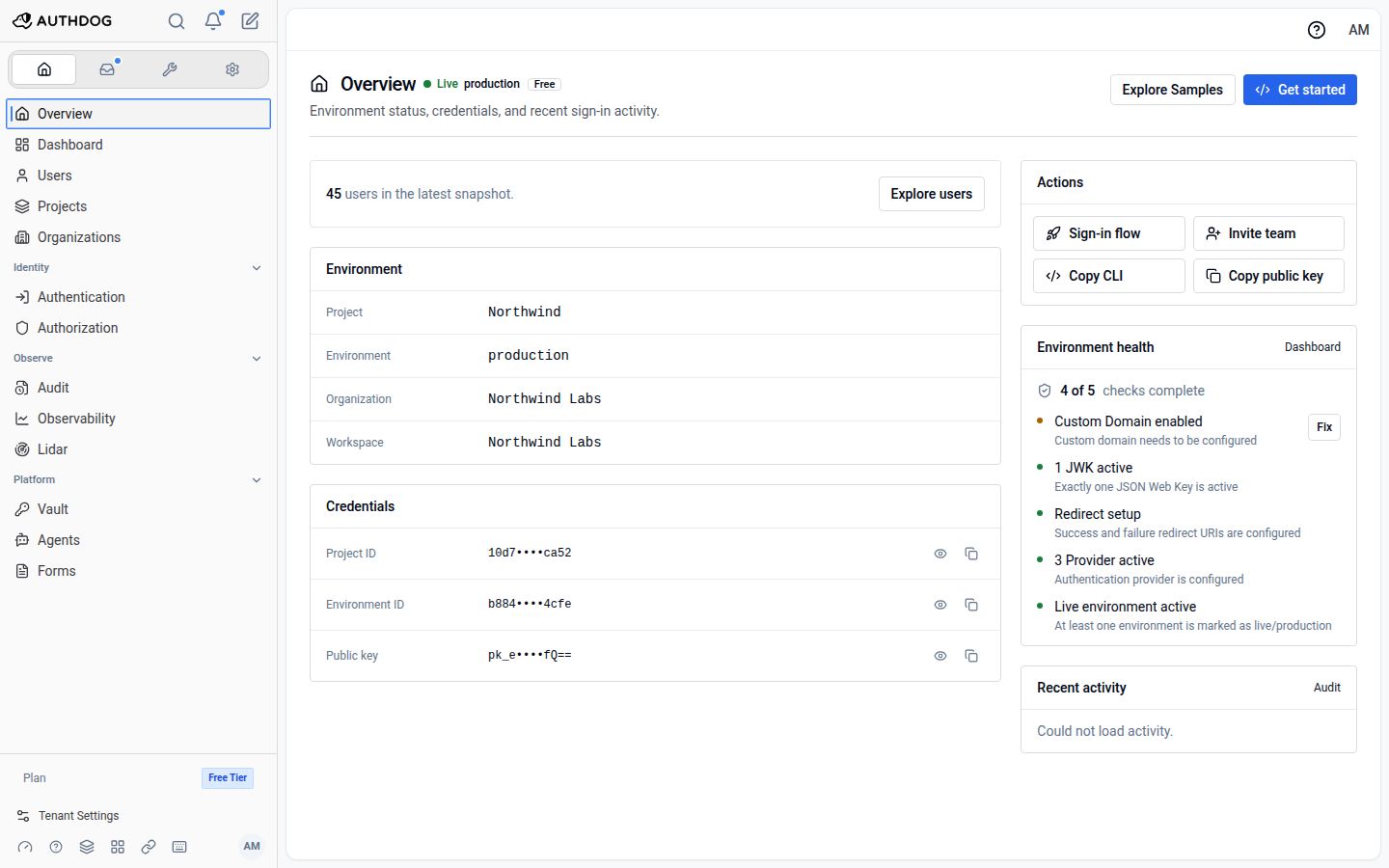
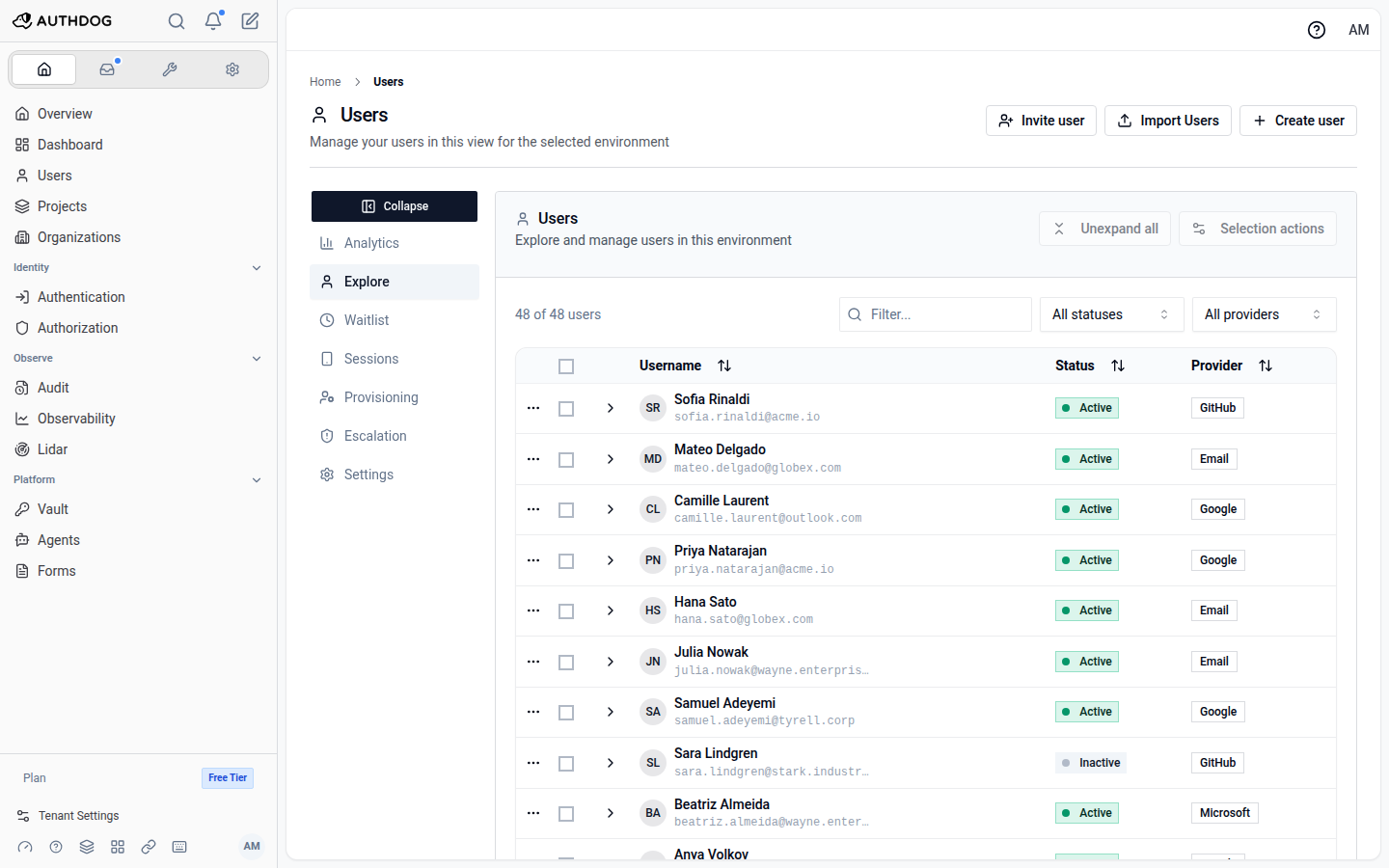
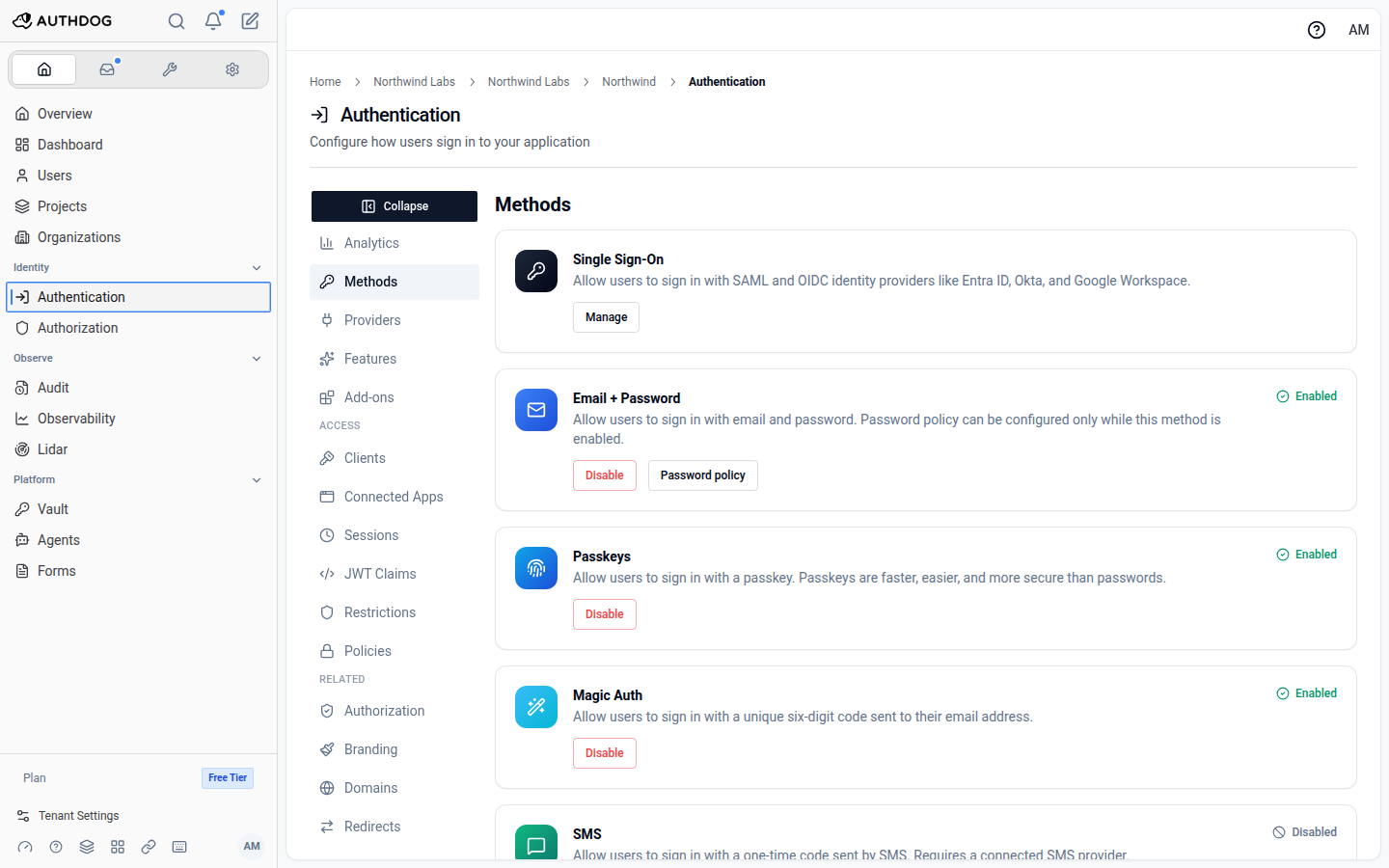
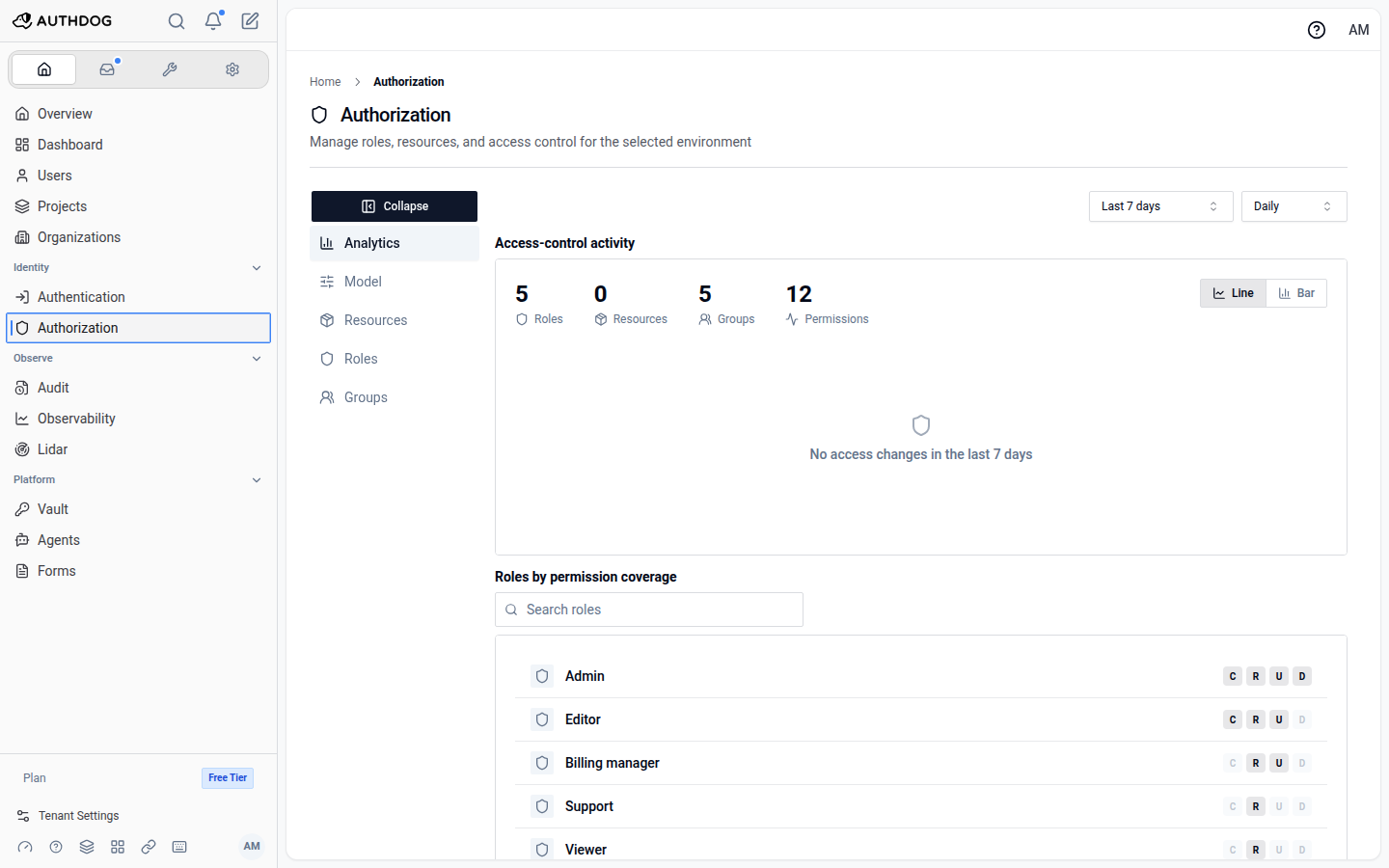
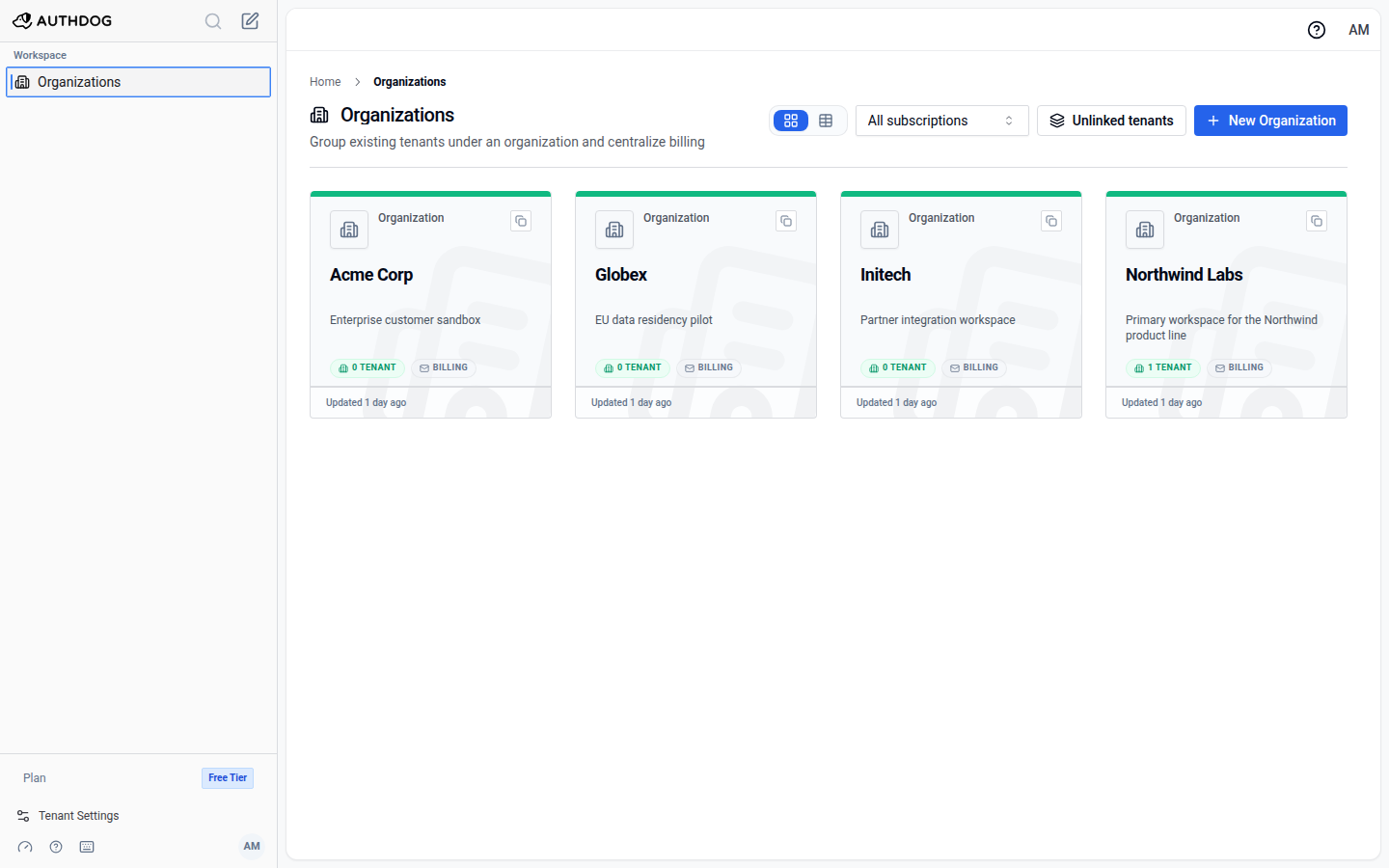
Environment overview
Platform
Services behind the products
The pieces that make the pillars operable: a console, an identity SIEM, an MCP gateway, and a relationship graph.
Lidar (identity SIEM)
Detections, posture checks, and log streaming to Datadog, Splunk, Sumo Logic, and more.
Learn more about Lidar (identity SIEM)MCP gateway
OAuth for MCP servers: registration, scopes, consent, and short-lived tokens.
Learn more about MCP gatewayFine-grained authorization
Zanzibar-style relationship tuples, model versions, and an assertions playground.
Learn more about Fine-grained authorizationReact components
Prebuilt sign-in, profile, and security UI, or the same APIs behind your own.
Learn more about React componentsIntegrations
Social and enterprise connectors, email and SMS providers, analytics add-ons.
Learn more about IntegrationsBuild
SDKs, CLI, and tools
The same session on the client, the server, and the command line.
Web SDK
React, Next.js, Vue, Svelte, Angular, and the rest share one session shape.
Learn more about Web SDKDeveloper tools
JWT and SAML decoders, SSL checks, and other free browser-native utilities.
Learn more about Developer toolsFree trial
Request a free trial
Tell us what you're building and we'll get you set up with a trial, plus someone who can answer questions as you evaluate.
- Full access to the platform while you evaluate it
- Help wiring it into your stack from someone who knows it
- Answers on SSO, SCIM, residency, and compliance requirements
Integrate
Connect one SDK or API to your application.
Configure
Choose policies and capabilities for each environment.
Enforce
Ship globally with identity controls at the edge.
Start with one product
Open the console, create an environment, and add the rest when you need it.